Thursday’s excursion takes us to a site that defines "magnificence." To understand the Pont du Gard, it helps to put its scale into perspective: imagine the Eiffel Tower. While the Eiffel Tower, built in 1889, is a symbol of modern industrial France, the Pont du Gard is its ancient equivalent~ a staggering feat of Roman engineering that has stood for nearly 2,000 years.
Built in the mid-1st century AD, this three-tiered aqueduct bridge was designed to carry water over the Gardon River to the city of Nîmes. It is a testament to human ingenuity, constructed with such precision that the water flowed across its 31-mile journey with a slope of only a few inches.
Orientation: The National Park Experience
The Pont du Gard is one of France's most treasured & visited National Parks. The site is a sprawling, protected landscape where history and nature coexist. To ensure you truly appreciate the scale of what you’re seeing, our first stop will be the on-site Museum.
We’ve already secured your tickets, and we highly recommend walking through the exhibits first. The museum provides a deep dive into how the Romans moved massive stones without modern machinery and the sheer cultural impact this bridge had on the region. Seeing the "how" and "why" first makes standing at the base of the bridge later that morning even more powerful.
While the Eiffel Tower and Empire State Building dominate the sky vertically, the Pont du Gard was designed to dominate the landscape horizontally.
To put it in perspective, the bridge is roughly900 feet (275 meters)long, which means if you laid theEiffel Toweron its side, the Pont du Gard would almost match it end-to-end... and it would take nearlythree full city blocks in Manhattan (based on the width of the Empire State Building) to cover the same distance.
After The Museum, we'll all hike out together on an Orientation Walk to the Pont du Gard. We'll point out the various areas of The Park, and walk you down to the Gardon River, where you actually get the very best views of the monument...
Pro Tip: consider bringing water shoes and/or swimming suit if you want to cool off in the River!
__________________________________
Mid-Day Lunching in the Park
Lunch today is on your own & at your leisure, allowing you to choose the pace of your afternoon. The park offers several distinct options:
The Rive Gauche Visitor Hub: A walk-up Snack Bar perfect for a quick, convenient bite or gelato in the arrival visitor hub (which includes the ticket offices, museum, gift shops, restrooms, etc)
Bistro du Pont: The Bridge-Side (Rive Droite) Snack Bar:A casual spot located right near the monument... a small cafeteria style snack bar - with open seating outside... ideal if you want to grab something quick & simple and get back to exploring the riverbanks.
Les Terrasses: This is the slightly more upscale, but very casual Bistro located on the Rive Droiteright over the bridge. It offers tables with waiter service on a beautiful terrace with views of the monument, a wonderful spot if you’d like a sit-down meal and a glass of rosé while soaking in the scenery.
_______________________________________
Afternoon Adventures
You'll have free time this afternoon & the choice is yours; You can just relax with a long leisurely lunch with a spritz or glass of wine at one of the Bistros... You can grab a take out sandwich & a beer and go have a picnic on the riverbank... You can wander the "Mémoires de Garrigue"~ a beautiful walking trail that showcases the Mediterranean landscape ~ or find a flat stone by the water for a quick dip.
Whether you are hiking the upper trails for that "Eiffel Tower-esque" view or relaxing by the river, you are standing in the presence of one of the greatest wonders of the ancient world...
We’ll all meet up back at The Visitors Hub in the afternoon and head back to the Villa for another Happy Hour Swim Party, where we can toast to the Romans and their incredible legacy!
_____________________________________
Happy Hours Swim Party, Dinner & All Night Fun
Back at Chateau du Soleil, we'll have the bars set up down at the pool for a late afternoon dip... And we'll gather later in The Solarium for Appetizers and then of course we'll head over to the loggia for another wonderful Dinner Party with fabulous foods & wines prepared by our Chefs Fabian & Coralie! It just keeps getting better! On a day like this, you'll be walking on sunshine!
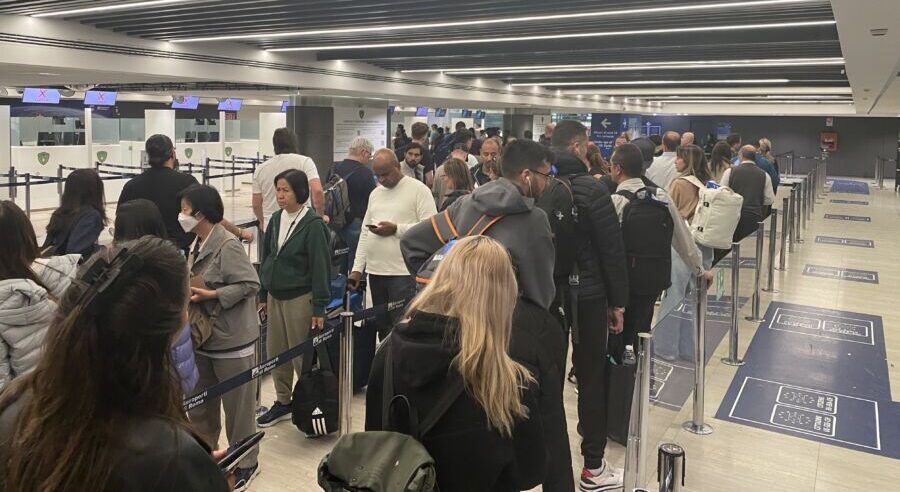
So you may have seen posts on the internet about long lines, frustrations and missed connections with the new EES system in the European airports... We certainly have... and we've been watching it closely. Like all new computer systems, when they're first introduced, this one has had some quirks that they're trying to work out, but they're rarely causing the huge "missed my connecting flight" hype that you may have seen on places like FaceBook... Most feedback is saying that wait times are not a whole lot different than before the introduction... If you've traveled a lot internationally, you know that over the years every now and then you hit a longer line at passport control/ immigration... This is no different ~ Depending on time of day and plane arrivals, lines can get a bit longer... But rarely are they hitting these 3 hour waits that you may have seen posted online... The majority of people are saying 20 to 40 minutes... and some are saying 5 to 15 minutes. Know that this new EES system just started about 2 weeks ago, and while there were some bugs in the system, they've worked most of them out in the first couple weeks... Likely by the time you get to Europe in mid-June, all will be running smoothly...
We suggest you read the detailed article below from Rick Steves (Europe Travel Guru) to familiarize yourself with the new EES before you get there:
EES: Will You Wait in Line to Enter Europe…or Breeze on Through?
By Rick Steves April 24, 2026
Traveling through immigration in Europe has changed. The European Union has implemented its Entry-Exit System (EES), a fully electronic way to check your passport when crossing borders. While most countries are handling this process smoothly, some are struggling a bit — and this has led to some alarming headlines and high-profile social media posts about long lines and serious delays. So, what should you actually expect the next time you fly to Europe?
With EES now fully implemented, traveling through immigration in Europe has changed.
We’ve chatted with researchers, guides, and travelers to collect a wide assortment of on-the-ground observations to answer your questions.
What’s the first thing I need to know?
That the vast majority of people we’ve spoken with had a positive experience with EES. No major delays, no missed flights, nothing out of the ordinary from typical international travel. Many even said “nothing felt different,” or even that the process felt smoother and faster than before.
Among those who did encounter long lines, most noted that local staff was on hand to usher people with tight connections to the front of the line. Some major airports have permission to temporarily pause EES altogether, at peak times, to allow the queues to die down. So, if you’re heading to Europe soon and have been fretting over those catastrophic reports, keep in mind that many are one-off incidents or headlines fishing for clicks.
That said, this is a new protocol — and with any major change, there are quirks being worked out, potential bottlenecks, and things worth knowing before you go.
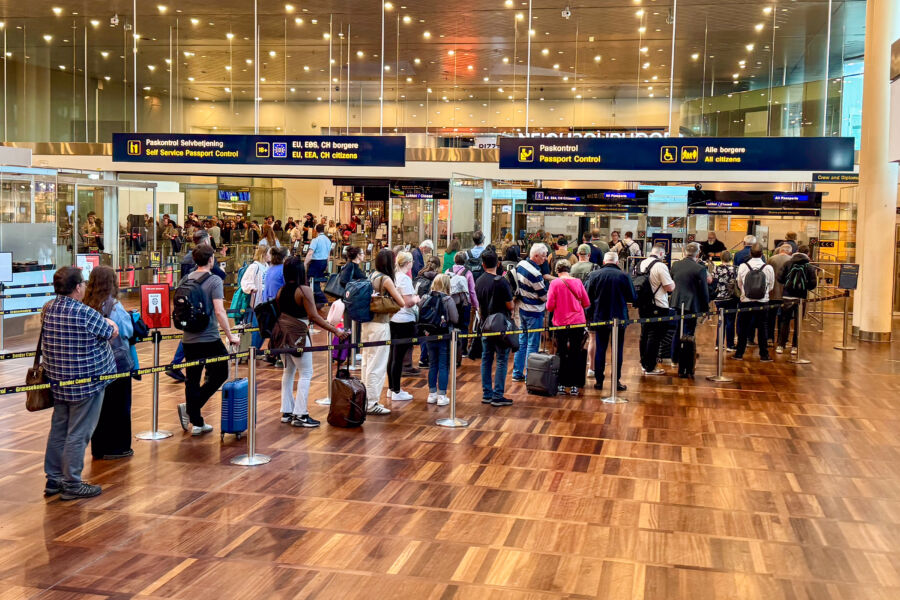
Most travelers have found EES lines to look a lot like this — minimal, and smooth.
OK, so…what is EES? And what do I have to do?
The Entry-Exit System is Europe’s technological upgrade to its immigration process, which effectively replaces passport stamps. When you first arrive in Europe, the system scans your biometric data (like your fingerprints and face), creates a profile for you, and stores it for three years. This makes it way easier for participating countries to track who you are, when you enter, and when you leave. Think of EES as a digital way for you to “clock in, clock out” every time you visit Europe.
EES was soft-launched back in October. Since then, each participating country has been rolling out its system individually. Some have found it no problem to implement……while others have had a tougher time with logistics. (More on that in a moment.) The date all countries were required to have EES up and running was April 10 (just 2 weeks ago)— which is why you’re seeing so much news about it right now.
What countries are included?
The 29 Schengen countries — that’s most of continental Europe, plus Iceland. These are the countries that have long operated without internal border checks; when you first land in one, you go through immigration…but traveling between them is as easy as crossing US state lines.
Key countries not included in EES are the United Kingdom and Ireland. The UK has its own similar process (called the ETA), and Ireland’s Common Travel Agreement keeps its immigration process more aligned with Britain than continental Europe. Turkey and the non-EU Balkan countries — like Serbia, Montenegro, Albania, Kosovo, and Bosnia and Herzegovina — are also not included.
Who does EES impact?
EES applies to travelers who are not citizens of the Schengen countries — like American tourists. If you have dual citizenship with a Schengen country and travel with that passport, EES does not apply to you. (But be sure you use the line for European passport holders.)
Where, exactly, do I go through EES?
You’ll encounter EES at the point where you first enter the Schengen zone. This could be your final destination, or it could be on a connection to another European flight. Here are four sample itineraries:
Flying from the US direct to Paris? You’ll go through EES in Paris, because France is a Schengen country.
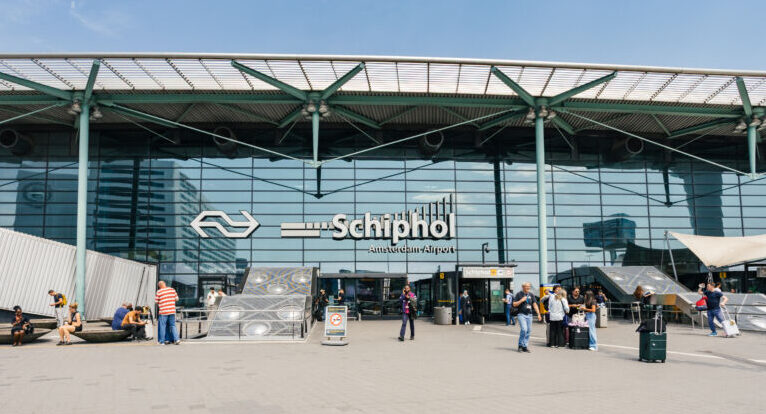
Flying from the US to Berlin, with a transfer in Amsterdam? You’ll go through EES in Amsterdam, because the Netherlands is a Schengen country and it’s your first point of entry to the Schengen zone.
Flying from the US to Barcelona, with a transfer in London? You’ll go through EES in Barcelona, because the United Kingdom is not in the Schengen zone — but Spain is.
Flying from the US to Dublin? You won’t go through EES, because Ireland is not in the Schengen zone.
It’s also worth noting that wherever you go through EES has no bearing on where you claim your luggage. If you’ve checked a bag, it will be checked through to your final destination.
What does going through EES look like?
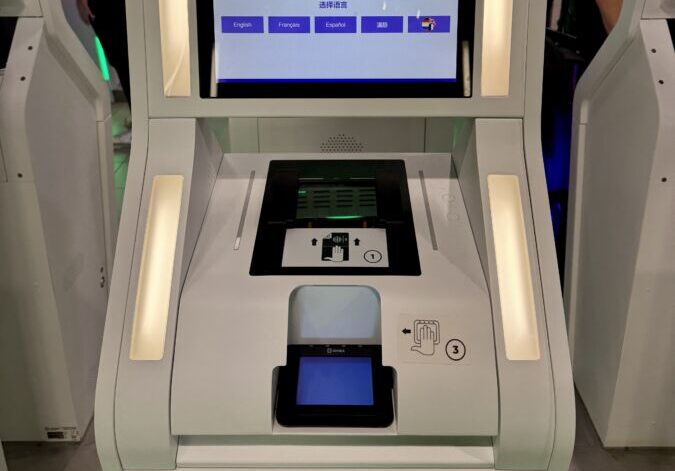
When you arrive in Europe and head toward immigration, you’ll encounter a self-service kiosk that scans your passport, your face, and your fingerprints. The kiosk creates a profile for you that will be used to track the length of your current stay and any further European travel.
An EES kiosk.
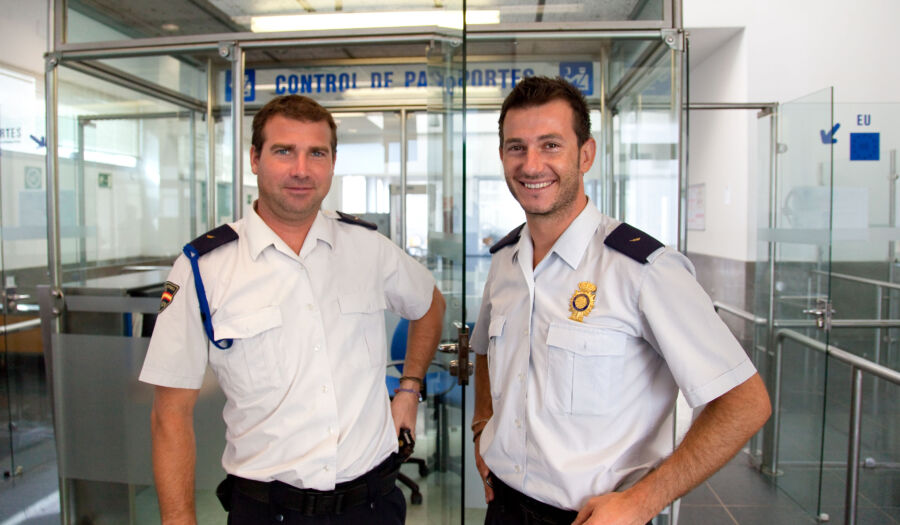
After this, you’ll go through a standard border control check. This will most likely happen at an e-gate — an automated gate where you’ll once again do a passport, face, and fingerprint scan to verify your identity (with no human interaction and no stamps given). However, there are often still conventional human-staffed passport booths standing by, where a person will scan and stamp your passport. You may be sent to one of these for a variety of reasons — or, frankly, for seemingly no reason whatsoever, especially during these early stages of EES, when some airports rely on manual checks to keep things moving.
But Europe wants to know when you arrive and when you depart — it’s called the Entry and Exit System, after all — so you’ll also go through a similar process before your return flight. Since you’re already registered, you’ll skip the kiosks and go straight to the e-gates, where the system can confirm it’s you departing (and that you haven’t overstayed your 90-day tourist visa).
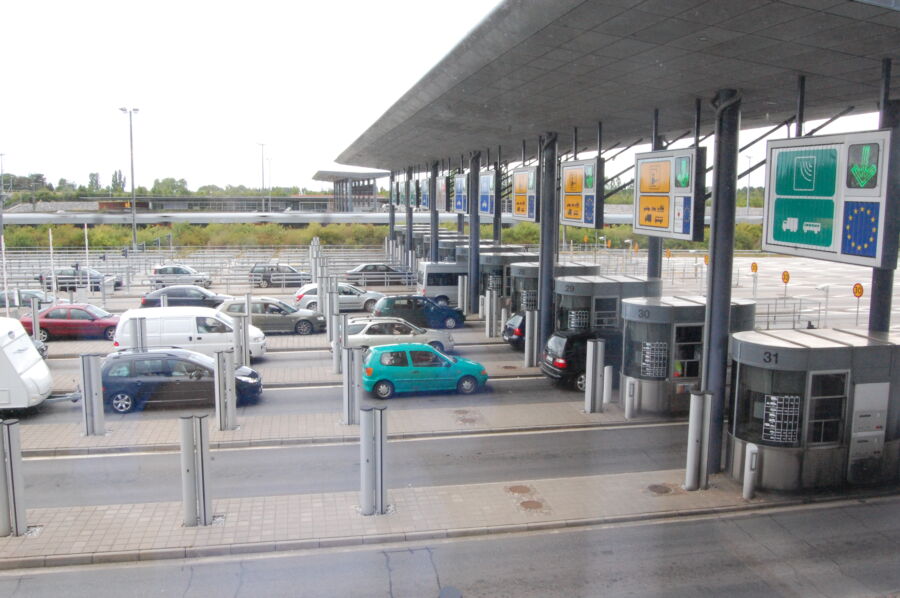
One thing that often gets overlooked: EES applies to all Schengen ports of entry. For most travelers, that means an airport — but if you’re arriving in Europe by car, boat, cruise ship, or train, you’ll go through EES, too. Traveling from London to Paris on the Eurostar? You’ll “clock in” to Europe at St. Pancras International, as you go through French immigration before boarding the train. (And most travelers have said it’s a breeze.)
EES isn’t just at airports — if you’re entering Europe by boat, train, or car, you’ll go through EES as well.
If I’ve already registered, do I have to do this again?
No…and yes. Once you arrive in Europe and are registered for EES, the system stores your profile for three years (or until you get a new passport). Until then, clocking in and clocking out of Europe will be relatively simple: After stepping up to the e-gates and scanning your passport, the machine will confirm it’s you…and off you go.
But here’s the catch: During this rollout period, travelers are finding that it’s often the same line for those who have already registered and those who still need to register. This is understandably frustrating, as it largely defeats the convenience of already being registered. But Europe’s thinking here seems to be that, since EES is so new, the vast majority of travelers are first-timers and therefore need to create a profile — so airports are all-hands-on-deck to help speed up this process.
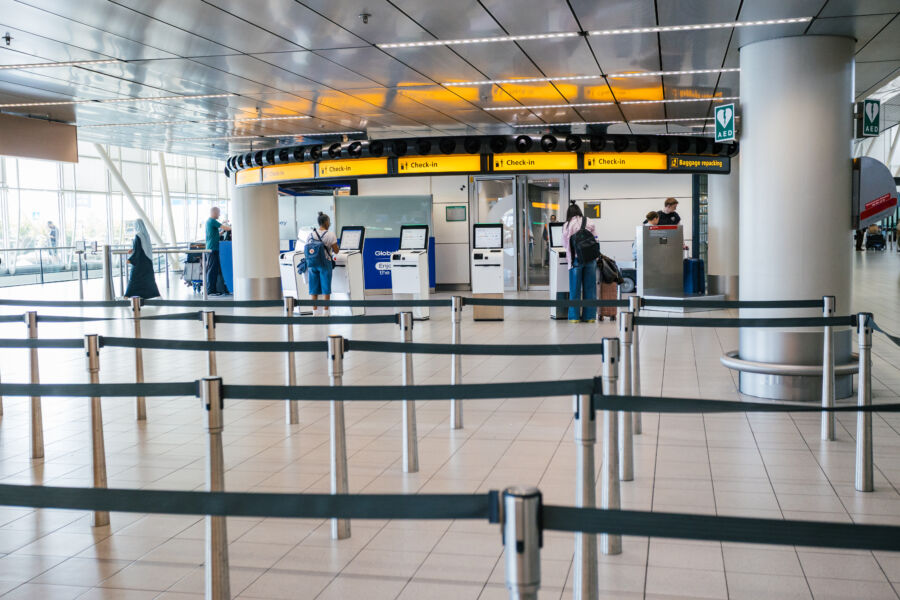
Some airports have already dedicated separate lines for those already registered and those needing to register — and in the (hopefully near) future, this will become more and more common. But for now, even if you already have an EES profile, you may get stuck waiting alongside those who are not.
Amsterdam’s Schiphol Airport is one airport that often has separate lines, for those waiting to register for EES — and those already registered.
Is this actually causing delays?
Most travelers, at most airports, are reporting minimal, if any, extra delay caused by EES. If anything, it just makes the entry procedure slightly more confusing, as you now need to find your way to the right place to register and/or cross the border. But if you read signs carefully and don’t hesitate to ask staff, it’s generally smooth sailing.
Yet as mentioned, some countries are struggling more than others. Two of the biggest “delay hot spots” appear to be Spain and Portugal, with cities like Barcelona and Lisbon occasionally seeing long lines of travelers — both inbound and outbound — waiting an hour or two for their turn at the EES kiosks.
However, many of these reported delays have less to do with EES than with staffing problems: Airports were simply overwhelmed with incoming flights and didn’t have enough border staff on hand to handle the queues.
Many long immigration lines are not because of EES — but because the airports were simply overwhelmed.
Also, when EES is causing a backlog, most airports have been generally good at managing it. Many have officers who usher people with tight connections to the front of the line, and some can also temporarily pause the process, if they recognize that EES is causing a logjam.
I’m about to fly to Europe. What should I do?
Above all, don’t panic. Avoid stewing over fearmongering headlines that are clearly trying to get clicks. Yes, there’s a potential for some delays, especially at a few key airports. But most travelers are having no real problems. Knowing what to expect will help you navigate the process and give you more confidence.
First, assess whether a long line would significantly impact your itinerary. Do you have a tight connection at the same airport where you’ll need to register for EES? Or will you encounter EES only at your final destination? If it’s the latter, any delay — while nevertheless frustrating — won’t cause you to miss a flight. You’ll just check into your hotel a little later.
For those with the short layover, consider researching how that airport has been handling EES lately by asking travelers who have recently been there. (Posting on the Rick Steves’ Europe Travel Forumand Rick Steves’ Europe Facebook Group are great places to start.) Most likely, the airport will be handling EES just fine. If you really think there’s a high chance your travels will be interrupted, consider making an itinerary adjustment. That said, given that EES seems to be smooth in most places, don’t automatically force yourself into a grueling six-hour layover because there was an off-chance of a delay.
Either way, don’t dilly-dally on your connection. Find the correct line as quickly as possible and don’t hesitate to check in with the staff if you’re cutting it close.
Cutting it close to make your connecting flight? Alert a border guard, and they might usher you to the front of the EES line.
And keep in mind that, in a way, none of this is new. International travel has always carried the risk of delay. Immigration lines have long swung between hours-long inchworm affairs and “done in a flash” — EES or not. When you cross a border, you’re always subject to long lines, tight connections, and factors out of your control.
So…why is all this happening?
There are two reasons. First, and most immediate, is to improve Europe’s immigration process and security. EES is designed to create a cohesive system that will make it easier for Europe to stop illegal immigration and better identify those who overstay their 90-day tourist visa. Instead of relying on a border guard to manually monitor passport stamps, EES can instantly verify both your identity and your travel status.
But EES is also Europe’s stepping stone toward an even bigger goal: the European Travel Information and Authorization System (ETIAS). This will effectively serve as a straightforward application to travel to Europe, requiring travelers to preregister and pay a small fee before they board their plane.
While this may sound intimidating, it’s far from unprecedented: ETIAS is essentially the same process as the United Kingdom’s ETA and the United States’ ESTA requirements — all part of a broader effort to streamline immigration by digitizing the process as much as possible.
However, ETIAS is not in effect yet — and will not be until at least October. (And don’t worry, you’ll hear plenty about it from us as it gets closer.) For now, you don’t need to worry about registering or paying a fee if you’re flying to Europe this spring, summer, or early fall. Instead, plan your trip as you always would…just be ready for things to look a little different when you land. EES is now part of the immigration experience. But with a little understanding and some mental preparation, it doesn’t have to be stressful.
In our 25 Years of taking our groups to Italy and France,(hundreds and hundreds of guests), we've never had anyone pick-pocketed... but it does happen a lot in the bigger cities, so we like to think it's because we make our guestsvery awarethat this happens... Mostly in the bigger tourist cities like Paris but of course it can happen anywhere... Don't let this scare you, it's no different than in New York, LA, or Chicago... If you're spending some time in one of the bigger cities, we just like for you to be aware...
Most tourists never see them coming because they are looking for the wrong person. They are looking for someone who looks like a thief. The ones who actually rob you look exactly like you.
The metro gets dozens of theft reports per day. The Eiffel Tower area is now ranked as one of the worst pickpocketing spots in ll of Paris. Nobody running these numbers is a scary man in a hoodie. It is almost always a small group of women who look like tourists.
Here is what to actually look for;
They Come In Threes
They almost never work alone. The standard crew is three. One spots the target, one blocks your view, one lifts the wallet. Sometimes it is four. Rarely two. Solo pickpockets exist but the professionals on the metro are always in a team.
If you see one, find the other two before you do anything else.
They Dress Like Tourists
This is the single thing tourists get wrong every time. They scan the platform for someone who looks suspicious. The professionals know this. So they dress exactly like the people they are going to rob.
Leggings. A crossbody bag. A summer dress. A backpack. Sneakers. A ponytail. Sunglasses on the head. Nothing stands out. Nothing signals danger.
If you are only watching for "sketchy-looking" people, you will miss every single one.
They Carry a Large Bag They Do Not Need
The bag is the tool. It is usually a large tote or a folded jacket hanging from the wrist. Something big enough to hide both hands behind while they work. They do not actually need to carry anything in it.
Watch the bag. If someone is holding a bag in a strange position, up near their chest, or draped over the arm of the person standing next to them on a crowded platform, that bag is a screen.
A jacket over the arm in July is the same tell. Nobody in Paris needs a jacket in July.
They Do Not Talk To Each Other
This is the tell that locks it in. Normal groups of women talking on a platform chat constantly. These ones do not. They stand together but they rarely speak. They scan.
Each one is watching a different zone of the platform or the carriage. They are picking the mark. They know who they are going to target before the train arrives.
If you see a group of three women standing together in silence, each looking in a different direction, you are watching a crew choose someone.
They Stand Near The Platform Edge
They position themselves close to where the doors will open. This is not about catching the train. It is about controlling the crowd flow when the doors open and close.
The person who lifts your wallet needs a clean exit. Standing near the door gives them three escape routes. On, Off or Back On as the doors shut in your face...
If a silent group of three has positioned itself right where the doors will open, step back. Let them board. Take the next train. It costs you four minutes. It saves you your passport, your phone, and every credit card you brought.
They Form a Circle onThe Platform
The moment they have picked a target, their body language changes... They form a loose circle, facing inward, like they are having a conversation. They are not. They are coordinating.
One is confirming the target. One is watching for police. One is rehearsing the move. This circle lasts maybe twenty seconds. If you catch it, you catch them before the work starts.
They Board The Train With You
They do not attack on the platform. They board the same carriage you are in. They stand near you in the crush of passengers. This is when the bag goes up against your body. This is when the jacket drapes across your arm.
You will feel nothing. A skilled pickpocket can unzip a backpack, remove a wallet, and rezip the bag in under two seconds. They practice this for years...
They Get Off One Stop Later
The move happens between stations. The extraction happens when the next stop is announced and the train starts slowing. By the time the doors open, the wallet is already inside their own bag. They step out. You stay on the train. You do not realise anything is missing until three stops later.
This is why so many tourists cannot identify who took their wallet. The thieves were in the carriage for ninety seconds and they are gone.
The High-Risk Stations And Lines
Thieves typically target crowded routes that connect major tourist landmarks.
Line 1 (Yellow): This is the "Tourist Express," connecting the Louvre, Champs-Élysées, and Arc de Triomphe. It is heavily patrolled but remains a top spot for professional pickpocketing teams.
Line 4 (Magenta): A high-traffic line that cuts through the center of the city. It has a reputation for being crowded and occasionally rowdy, particularly late at night.
Line 2 (Blue) & Line 9 (Olive): These lines serve Montmartre and Trocadéro. While not inherently "dangerous," they are hotspots for distraction scams and bag snatching.
Gare du Nord / Gare de l'Est: As major transport hubs, these stations attract large crowds and "drifter" populations. Be vigilant with your luggage here.
What To Do If You Spot a Crew
Do not confront them. Do not take photos. Do not film them. They work with the same crew every day and they know how to make a tourist look like the aggressor.
Just move. Walk to the other end of the platform. Take a different carriage. Take the next train. Step into a shop. Break the line of sight.
The Three Rules That Actually Protect You
One: Wear a money belt or a zipped inside pocket for your passport, one credit card, and enough cash for the day. Everything else stays in the hotel safe. You can get nylon/silk "neck wallets" that hang loosely underneath your shirt... I find these more comfortable than the waist belts...
Two: Never put a wallet or a phone in a back pocket. Never hang a bag off the back of a restaurant chair. Never set a phone down on a café table facing the street.
Three: When you board a crowded metro or bus, turn your bag so it sits across your chest, not on your hip. Keep one hand resting on the zip.
That's it. That is how you do not become the next tourist filing a report at the Metro office on the last day of your vacation. The pickpockets are not supernatural... They are just three women who studied you for ten seconds on a platform and decided you were the easiest person to rob that day. The second you know what to look for, you stop being that person! Don't be afraid, just be aware...